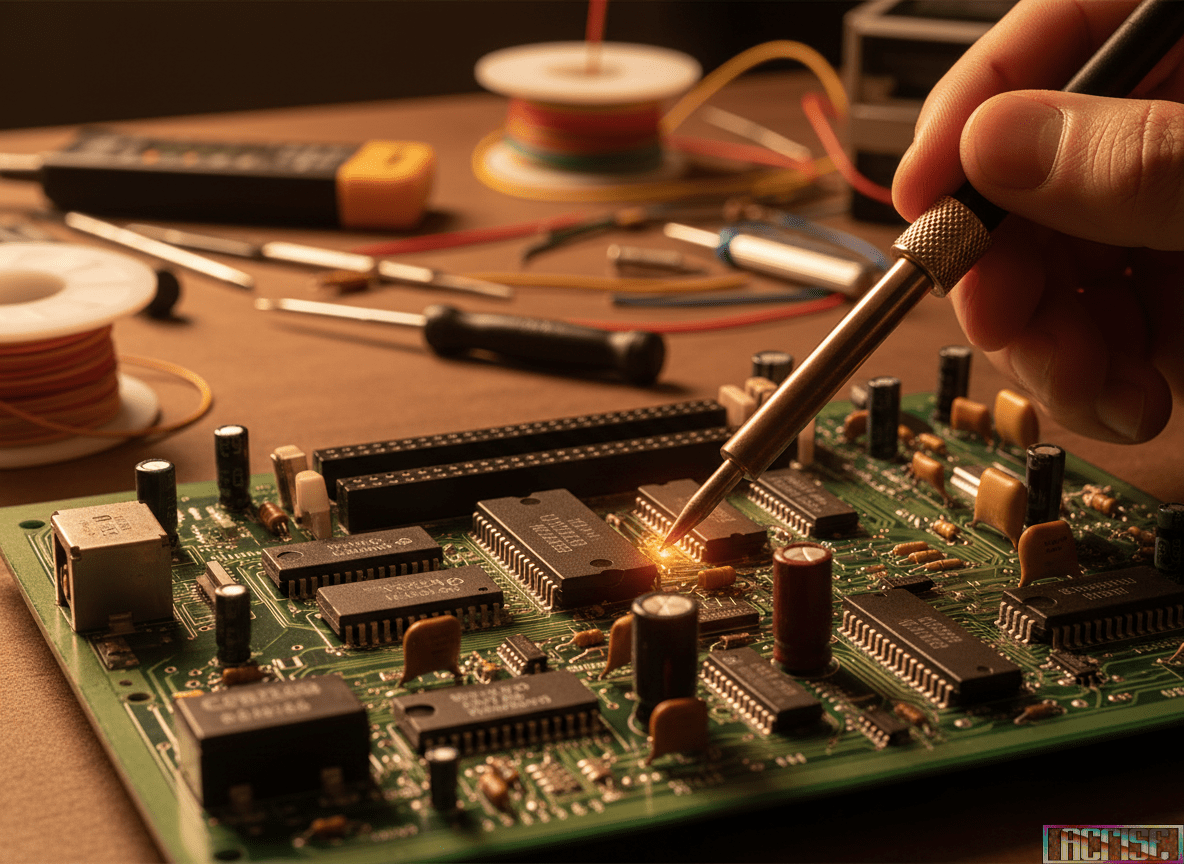
Not every retro story is about a new release. Sometimes it’s about the quiet heroism of keeping the machines alive long enough to create the next one.
We’ve seen a familiar pattern lately: someone starts a new project, motivation is high, tools are ready, the first test build runs… and then the C64 begins to behave like it’s haunted. Random crashes. Glitches that don’t reproduce. A SID that sounds “off” only on Tuesdays. You know the vibe.
The good news: a surprising number of these “mystery problems” come down to a handful of small, boring fixes that are easy to postpone and painful to ignore. If you’re building or testing on real hardware, here’s a practical checklist that can save weeks of confusion:
- Power supply sanity check
Old PSUs are legendary for failing in creative ways. If you can, use a modern replacement or at least verify voltages under load. “It boots” is not the same as “it’s stable.” - Socket contact and chip seating
Oxidation and micro-movement can cause intermittent issues. Reseating chips carefully and cleaning contacts can turn “random” into “reliable.” - Heat and long sessions
Some faults only appear after 30–60 minutes. If your project crashes “later,” test with the case open, watch temperatures, and consider airflow. - Drive and media variables
If you’re testing with different devices (1541, SD2IEC, Pi1541, Ultimate), keep notes. A loader that’s “fine” on one setup can expose timing edges on another. - Grounding and cables
Bad video cables, noisy power strips, or weird grounding can introduce artifacts that look like code bugs. Swap cables before rewriting routines at 2 a.m.
None of this is glamorous. But it’s the foundation. The scene is full of people who can optimize cycles like poetry—yet the most powerful optimization is still: a stable machine.
If you’ve got your own “tiny fix that saved everything,” share it. These stories are gold, especially for newcomers who think every glitch is their fault. Sometimes the best debugging tool is a multimeter and a bit of patience.
Leave a Reply