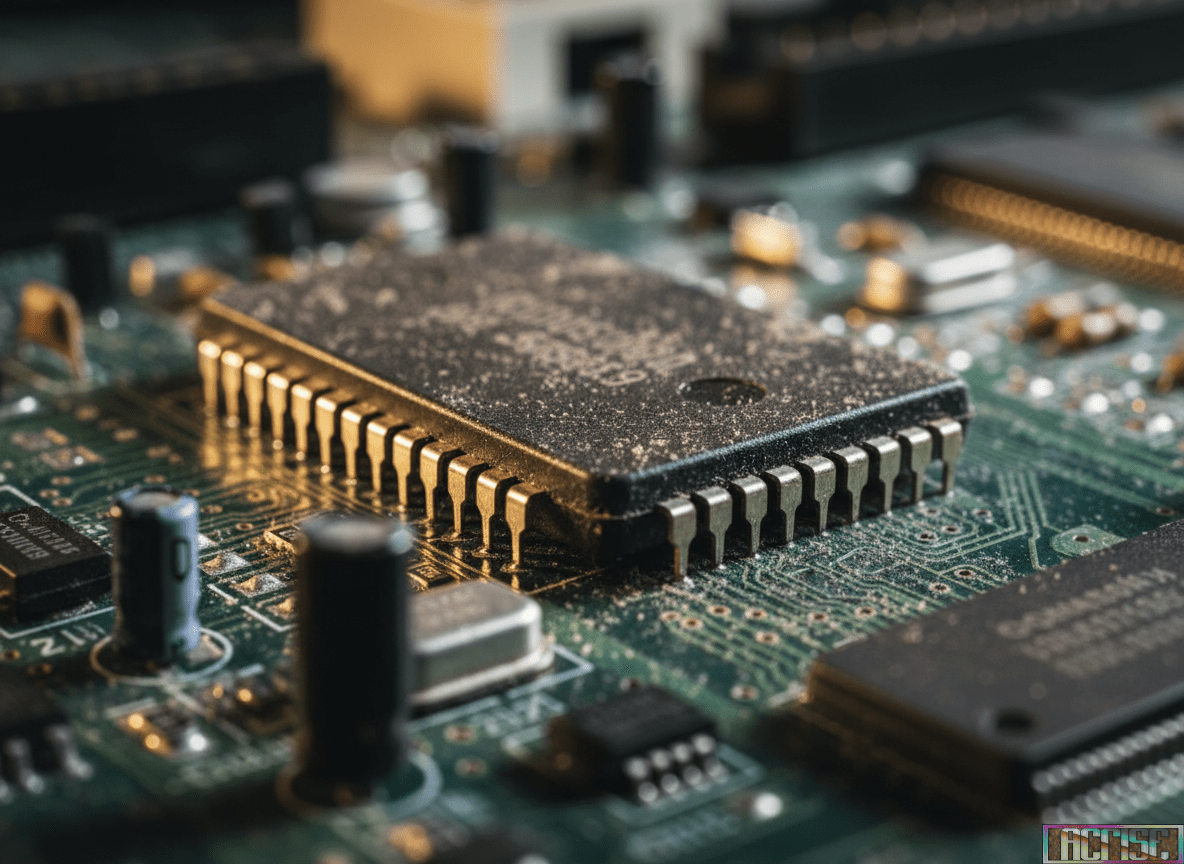
If the Commodore 64 had a heartbeat, it would be measured in clock cycles. But if it had a soul, it would sing through one tiny piece of silicon: the SID chip. Officially known as the Sound Interface Device, the SID is the reason the C64 didn’t just play games and demos—it performed them. Decades later, people still recognize that unmistakable growl, that liquid filter sweep, that punchy bass that somehow feels bigger than the machine itself.
What makes the SID so special?
On paper, the SID doesn’t look like it should be legendary: three voices, a handful of waveforms, and a filter section that—depending on the chip revision—can behave like a polite instrument or a wild animal. But that’s exactly the point. The SID isn’t “perfect.” It’s characterful.
The classic C64 sound comes mainly from two SID generations:
- MOS 6581 (earlier chips): often described as warmer, dirtier, more unpredictable. The filter behavior can vary from chip to chip, which is why two real C64s can sound slightly different.
- MOS 8580 (later chips, C64C era): generally cleaner, more stable, with a different filter response.
That variation is not a flaw in the culture—it’s fuel. Musicians learned to compose with the chip, not against it. They exploited quirks, pushed envelopes, and turned limitations into style. The SID became an instrument you don’t just program—you play.
The SID created a universe of music
The C64 scene is packed with tracks that feel timeless: energetic demo anthems, melancholic melodies, and experimental sound design that still surprises modern ears. SID composers didn’t just write background loops—they built identity. Many of the most iconic demo moments are inseparable from their music: the drop, the filter sweep, the sudden arpeggio storm that makes a crowd react even today.
And it wasn’t only “one famous tune.” The SID library is massive: thousands upon thousands of tracks across games, demos, cracktros, music disks, and modern homebrew releases. The chip became a cultural archive—one that still grows.
Can you still buy a SID chip today?
Yes—but with a bit of realism.
Original SID chips are vintage parts. That means availability depends on the second-hand market, donor boards, and specialist sellers. Typical places people look:
- eBay (common, but quality varies—watch for pulled chips and unclear testing)
- Retro hardware shops and C64 specialist stores (often tested, sometimes pricier)
- Scene marketplaces / forums (community-driven, sometimes the best option)
- Donor machines (buying a non-working C64 for parts can be a practical route)
Important note: because SIDs are old, you want tested chips if possible. Also, handle them carefully (ESD precautions) and make sure your C64 power situation is safe—bad PSUs have killed more chips than bad code ever did.
Modern alternatives: SID without the risk
If you want the SID vibe but don’t want to gamble on 40-year-old silicon, there are modern solutions:
- SID replacements / FPGA-based clones (varying accuracy and “feel”)
- External SID players and cartridges that let you enjoy SID music with less hardware stress
- Software emulation (great for convenience, but purists still love real hardware)
Collectors often say: emulation can be excellent, but real SID has that last bit of “alive” in the edges—especially when filters and subtle distortion become part of the music.
Why the SID still matters in 2026
Because it’s not nostalgia alone. The SID is a reminder that constraints can produce art with a strong signature. In a world of infinite plugins and perfect digital sound, the SID remains instantly recognizable. It’s a sound that doesn’t try to be everything. It tries to be itself—and it succeeds.
So whether you’re listening to classic game themes, digging through demo music disks, or composing a brand-new track for a fresh C64 release: the SID is still doing what it always did best.
It turns code into emotion.
Leave a Reply